How Do You Know How Much to Aerate Beer
Wort aeration is i of the parts of the brewing process that you don't really think about after brewing a few batches, yous simply seem to practise it instinctively every time you lot brew. It is an of import part of the brewday that is then easy to do that at that place is really no reason not to practise it.
Reverse to every other part of the brewing process where we don't want to introduce whatsoever oxygen to the beer, aerating the wort merely before pitching the yeast introduces oxygen that is essential for yeast growth and reproduction.
Aerating the wort is crucial in promoting yeast health and ensuring a strong fermentation with a short lag time (a quick start). Failing to introduce enough oxygen into the wort once the wort is chilled can lead to bug with extended time for the beer to start fermenting and beer declining to ferment out completely a dreaded stalled fermentation.
With all this in mind let's take a look at some of the ways homebrewers tin can aerate the wort to make the all-time beer possible.
When To Aerate The Wort?
At all other times, you should practice everything yous tin to ensure air or oxygen doesn't get in the beer. Every footstep of the process, you should aim to introduce as little air as possible.
It is but but prior to pitching the yeast that y'all volition desire to innovate oxygen into solution.
This means that after the eddy and after chilling the beer to pitching temperature. This is when you desire to get as much oxygen into the wort as possible.
What we do not want to do is add together oxygen or air when the beer is still hot (hot side aeration) or later fermentation has started or is complete.
Wort Aeration Methods
There are multiple ways you tin introduce oxygen into your beer, some volition involve no equipment and merely a petty bit of effort, others will require some equipment and will increment the amount of oxygen you are able to innovate into the wort. Commencement of all, allow'south start with the easiest method and the 1 nearly every home brew starts off with.
Splashing & Agitation
The easiest method of aerating the wort is to run the wort later chilling from the kettle into the fermenter from a height. This drop encourages splashing and foaming of the wort which introduces oxygen.
This tin can be every bit uncomplicated as opening a tap from the kettle and dropping the wort from a pinnacle into the fermenter or pouring the wort backwards and forrad between two sansited vessels. The more splashing and agitation the more oxygen will exist introduced.
When I first started brewing I would cascade the beer through a sanitised strainer which firstly would remove hops and other debris from the wort but secondly create a lot of agitation and splashing.
Another simple method is merely before pitching your yeast to grab a sanitised jug and lift the beer out of the fermenter in the jug and pour it back in from a height. This can be done once more and again as many times as necessary to go the wort nicely aerated.


If yous use a hose to transfer wort to the fermenter a simple device called a siphon spray wort aerator can be attached to the hose. When the beer is transferred the siphon spray will lengthened the beer and introduce oxygen.
Pumps & Injection


The adjacent methods of wort aeration rely on mechanical devices like pumps and air stones to aerate the wort. The biggest advantage of these types of device is that they enable you to get a much college level of oxygen into the wort prior to pitching the yeast.
O2 injection is what most commercial breweries use to ensure high levels of oxygen for a swift and consummate fermentation. Domicile brewers on the other manus who probably don't need to use pure oxygen tin inject air into the beer fairly just.
Aquarium Pumps To Aerate Wort
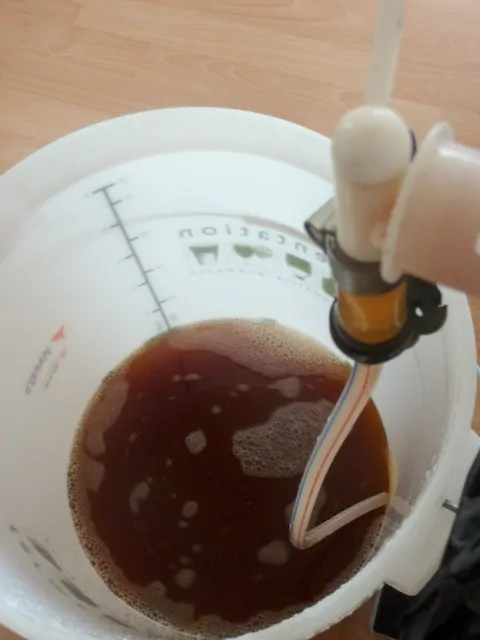
A simple aquarium pump is a great way to deliquesce oxygen in the beer and aerate the wort. Most aquarium pumps accept HEPA filters that volition remove contaminants and dust from the air and then inject it into the beer.
In performance, a simple aquarium pump with a length of small bore siphon tubing immersed in the wort will allow air from the room to be bubbled into the wort. Combine this with a diffusion rock and you tin quickly get a really efficient wort aeration setup going.
I would highly encourage using a stainless steel diffusion stone rather than an aquarium rock. Firstly, because sanitising a stainless steel rock is much easier past simply boiling it in water for 10 minutes compared to the porous material aquarium stones are made of. Secondly, the aquarium stones I take used tend to break or wear very quickly.
It volition have around 15 minutes of running the pump to get a good level of oxygen dissolved into solution but it is of class only a case of turning information technology on and keeping an eye on it.
Pure Oxygen Injection
Probably the method that will achieve the most aeration for the homebrewer is to inject pure oxygen into the wort. This will, of course, require a bottle of oxygen and a regulator.
If you lot desire to go this route y'all volition demand to find a gas supplier to supply you the oxygen bottles and then a regulator to control the period of gas coming from the canteen when you open the tap. Apart from this, it will exist similar to using an aquarium pump, you can adhere a hose and a diffusion rock and aerate the beer quickly and effectively with pure oxygen
Compared to pumping regular air with an aquarium pump, using pure oxygen will have a lot less time to achieve a much higher level of oxygen in solution in the wort. Around 2 – 3 minutes will be sufficient for a 5 gallon batch of beer.
The Effectiveness of Wort Aeration Methods
The most constructive method of wort aeration is by using pure oxygen and injecting it into the wort, this is followed but injecting room air via an aquarium pump and then agitation or shaking air into the wort.
Choosing whatever one of these methods is more beneficial than doing nothing at all. In fact, research carried out by Wyeast found that of all the methods splashing was quite constructive for the homebrewer. The table below shows the results of their research
| Method | Do ppm | Time |
| Siphon Spray | four ppm | 0 sec. |
| Splashing & Shaking | eight ppm | 40 sec. |
| Aquarium Pump west/ stone | eight ppm | 5 min |
| Pure Oxygen w/ rock | 0-26ppm | sixty sec (12ppm) |
It was concluded that pumping compressed air through a rock is non an efficient way to provide adequate levels of Do. Traditional splashing and shaking, although laborious, is fairly efficient at dissolving upwardly to 8 ppm oxygen. To increase levels of oxygen, the carboy headspace can be purged with pure oxygen prior to shaking. The easiest and most effective method remains injecting pure oxygen through a scintered stone.
With this in listen I call up it is fairly safe to say that aerating the wort needn't be something to concern yourself about. It is even so an constructive pace to have in your brewday to ensure maximum yeast health and quick fermentations.
How Do You Know How Much to Aerate Beer
Source: https://homebrewanswers.com/wort-aeration-oxygenation/
0 Response to "How Do You Know How Much to Aerate Beer"
Post a Comment